The key point
The short version
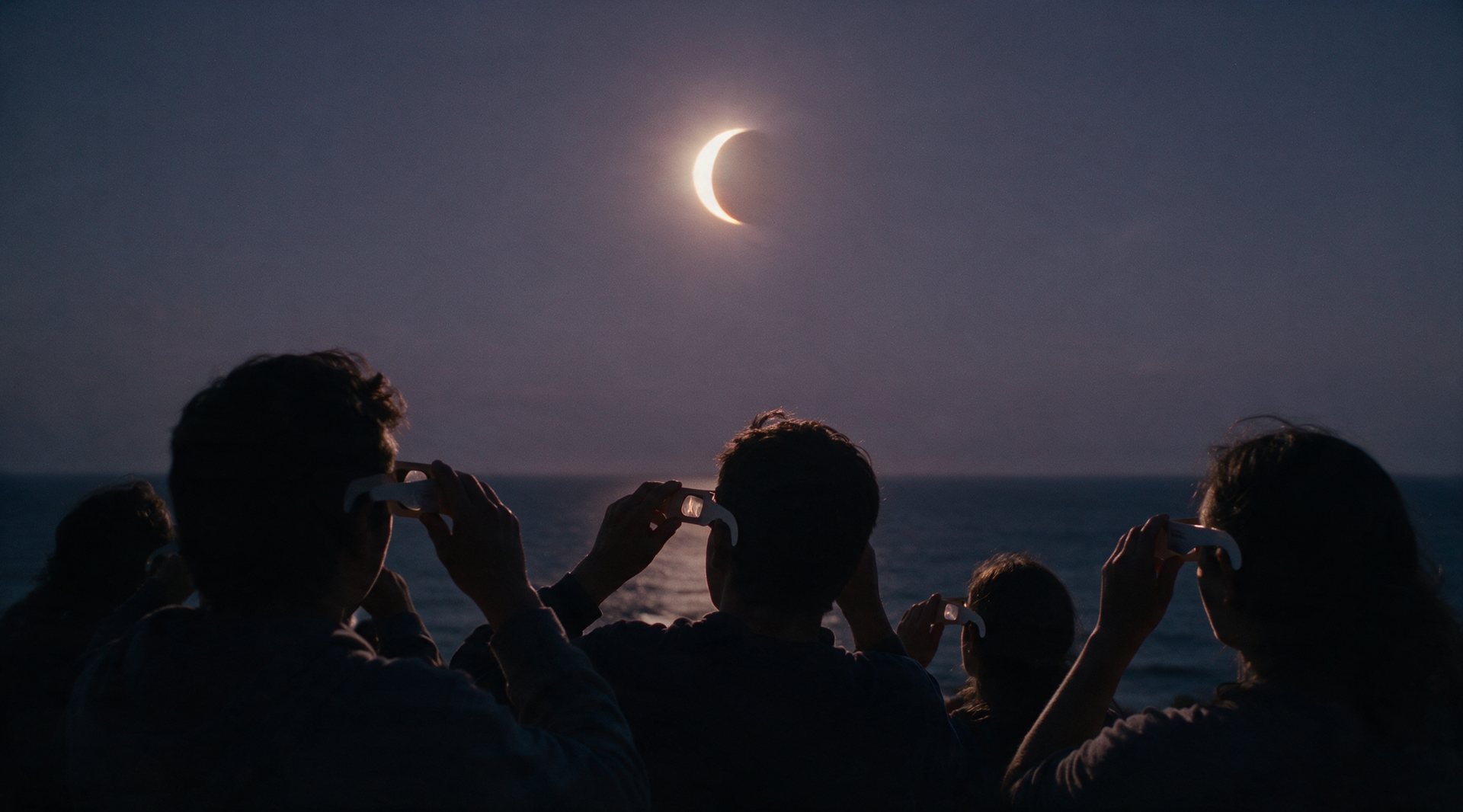
Buy glasses certified to ISO 12312-2, from a seller on the American Astronomical Society's vetted list. Wear them for every partial phase. Take them off only during totality itself — 10:45:33 to 10:50:01 in Gibraltar — and put them back on the instant the Sun's edge returns.
- The standard
- ISO 12312-2
- Filters on
- 09:41 – 12:01
- Naked eye safe
- 10:45:33 – 10:50:01
- Verify sellers at
- eclipse.aas.org
One standard matters
Real eclipse glasses conform to ISO 12312-2, the international standard for solar viewers, and say so on the frame. The filter cuts visible light to a sliver and blocks the ultraviolet and infrared that do the silent damage. Certification is the entire test. A cheap certified pair protects you exactly as well as an expensive one; an uncertified pair is a liability at any price.
The catch is that a counterfeit prints the same words on the same cardboard. The American Astronomical Society keeps a list of manufacturers and resellers whose filters have been independently tested, and buying from that list is the only reliable defence. It costs nothing to check and takes a minute.
Check the pair before the day
01 Inspect the filter
Scratches, pinholes, creases, or film lifting from the frame mean the pair goes in the bin. Filters are cheap; retinas are not.
02 Test them indoors
Through an intact solar filter you should see almost nothing — only the very brightest lights, faintly. If you can make out furniture, the filter is not safe for the Sun.
03 Fit them to children properly
Small faces leak light around adult-sized frames. The partial phases run for over two hours, so plan on supervising for the duration, not just at the start.
The myths that damage eyesight
- Sunglasses are not filters, however dark and however many pairs you stack. They pass thousands of times more light than a solar filter.
- A phone screen does not make the Sun safe, and pointing an unfiltered camera at it can destroy the sensor. Looking through an unfiltered optical viewfinder is worse than the naked eye.
- Smoked glass, exposed film, CDs and space blankets belong to folklore. The one household alternative the safety bodies accept is welder's glass of shade 12 or darker.
Heads up
Never put eclipse glasses behind binoculars or a telescope
Magnifying optics concentrate enough heat to burn through a handheld filter in seconds, with your eye on the other side. Optics need purpose-made solar filters mounted on the front, or they stay in the bag until totality.
The four minutes without them
During totality the Moon covers the Sun completely and the corona shining around it is about as bright as a full moon. For those 4 minutes 28 seconds — and only those — the naked eye is safe, and glasses would actually rob you of the sight. Off at second contact, when the last bead of sunlight breaks. Back on at third, the moment the diamond ring flashes on the far rim: the returning crescent is dangerous from its first instant.
No glasses? Project it
A pinhole in a piece of card, held with the Sun behind you, throws a crisp little crescent onto any pale surface. During the partial phases the gaps between tree leaves do the same for free, scattering hundreds of crescent suns across the ground. Projection needs no equipment and carries no risk, because you never look at the Sun at all.
Can I reuse glasses from a previous eclipse?+
If they are ISO 12312-2 certified and undamaged, yes — the AAS advises that the filters do not expire, whatever the printed warnings say. Inspect them properly first, and bin anything scratched or creased.
Do I need glasses during totality?+
No. With the Sun fully covered, from 10:45:33 to 10:50:01 in Gibraltar, the naked eye is safe and the view is the whole point. The moment any direct Sun returns, filters go back on.
Where should I buy them?+
From a manufacturer or reseller on the AAS's vetted list at eclipse.aas.org/eye-safety. We do not sell or earn from glasses, and we would rather point you at the checked list than at any single brand.
Eyes sorted. Now pick your spot.
Where you stand shapes what you remember. The viewing guide covers Europa Point, the Upper Rock, the marinas and the beaches, honestly.
What we read
Everything above traces to one of these. Where a rule is set by a government rather than by us, go to the primary source before you travel — we check this page on a schedule, not continuously.
- Eye safety for solar eclipses · American Astronomical Society
- Eclipse safety · NASA
- 2 August 2027 eclipse in Gibraltar, timed to the second · timeanddate.com